What happens at the end of science? Philosophy?It is the kind of question that can pause a conversation. Not because science fails, and not because philosophy is waiting at the edge of the laboratory to correct it, but because every discipline, if you follow it far enough, begins to run into its...
Nikolai Alvarado Nikolai Alvarado presented a paper entitled Urban Informality, Migration, and Waste: Spatio-Corporeal Cartographies of Environmental Oppression at the second annual UIC Encounter on Migration and Indigenous People last fall. He was also awarded a Humanities Research...
As a Roepke Research Scholar last fall, I helped Dr. Julie Cidell investigate railyard redevelopment in Chicago. Starting from a 1915 Chicago Association of Commerce report, I used Google Maps and basic georeferencing strategies to locate and gather modern-day imagery of railyards detailed in...
I started playing Sim City at age six on my parents’ new personal computer, which was my introduction to urban planning and probably led me to become a transportation planner. When I first began studying geography at Illinois, I was most interested in how and why cities function in the various ways...
Aisling Reynolds-Feighan graduated from University College, Dublin (UCD) with a BA in economics and geography in 1985. She earned an MA in economics the following year and then joined our PhD program in Fall 1987. As part of her doctoral research, I traveled to Houston with Aisling to interview...
Some Arctic regions regain their “greenness” within a decade of a sudden permafrost collapse, while others can take a century or more to recover, researchers report in a new study. The difference is directly related to each site’s gross primary productivity, a measure of its photosynthetic capacity...
Jordan McAlister is a human geographer with interests in the built environment, historical geography, and historic preservation. A native of Texas, he has long taken an interest in the cultural and regional geographies of...
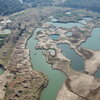
A new study using multidecade satellite imagery and face-to-face human interviews tracked the environmental and societal impacts of gravel mining in the Lubha River, Northeast Bangladesh. The researchers found that the river had recovered its natural shape within just four years after gravel mining...