What happens at the end of science? Philosophy?
It is the kind of question that can pause a conversation. Not because science fails, and not because philosophy is waiting at the edge of the laboratory to correct it, but because every discipline, if you follow it far enough, begins to run into its own foundations. What counts as truth? What can be known? What is real? What do numbers describe, and what do they leave out? At a certain depth, questions begin to blend between fields of study.
In the College of Liberal Arts and Sciences at the University of Illinois Urbana-Champaign, a group of students has chosen to move between science and the humanities. Their schedules are crowded; their degree plans are complicated. But they are trying to make room for the fact that curiosity does not always arrive in a single form.
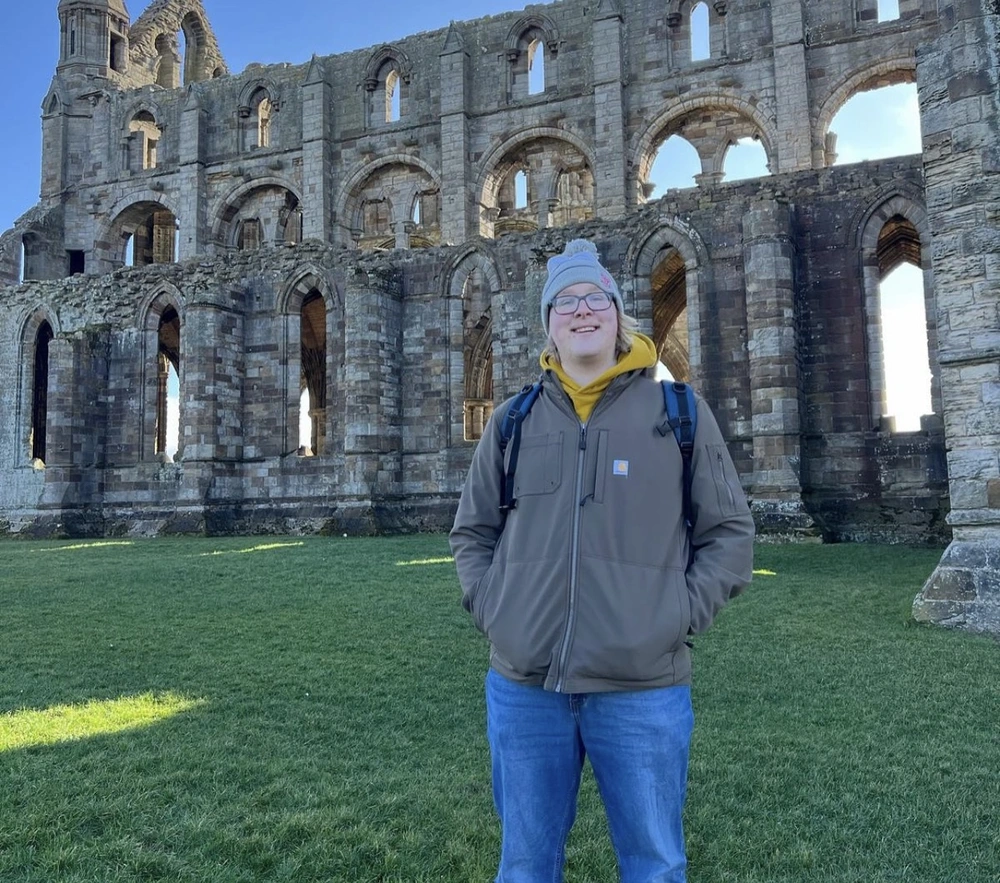
Of the roughly 12,517 undergrads in LAS, more than 1,000 are pursuing degrees in more than one major, according to the LAS Student Academic Affairs Office. I spoke with a few of them to learn more about their thoughts and college experience. One of those three was Jess Johnson, who majors in history and geography & geographical information science.
Jess did not come to college planning that kind of academic split. He arrived as a history major, the subject that felt closest to him since high school.
“In elementary school, I was maybe a little bit of everything,” Jess said. “But it was definitely history, and a bit of science, by the time I was a teenager.”
Jess said that the challenge of double majoring does not always announce itself right away. But as students move into junior- and senior-level work, the assignments become more specialized, and the act of moving between them becomes its own skill.
“There have been plenty of days where I’ve gone from writing a paper in history to creating a map for a cartography class,” he said. “Those things aren’t very similar, but it has become natural to me.”
Jess talks about his majors as two different ways of learning how to think. That, to him, is where the overlap lives. History and GGIS both require independence of mind. Both ask students to make judgments, form conclusions, and explain those conclusions clearly. In history, that may mean building an argument from sources. In GGIS, it may mean deciding how to represent information and what story a map is telling.
While history and GGIS seem to be distant from each other, there is the possibility of the two halves of his education meeting directly in the job market as he has seen job openings that involve both fields.
When asked why he would still recommend double majoring to first-year students, his answer is rooted less in career strategy than in the purpose of college itself.
“You come to college to learn things,” Jess said. “There’s never been a day where I’ve had classes from both majors where I haven’t, at the end of the day, realized that I learned something.”
Read about two other students majoring in more than one subject