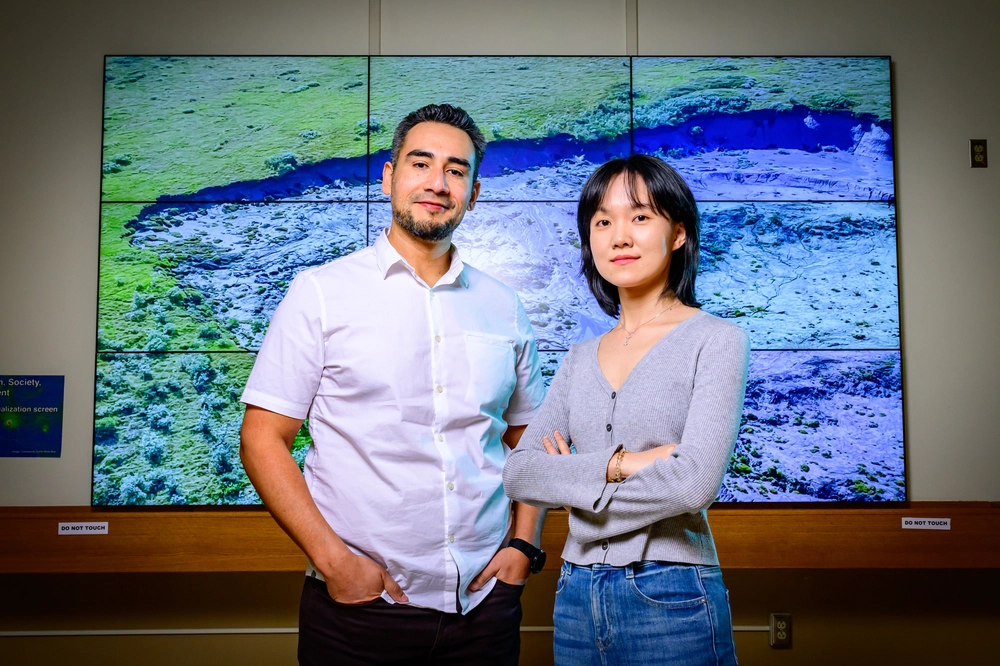
Some Arctic regions regain their “greenness” within a decade of a sudden permafrost collapse, while others can take a century or more to recover, researchers report in a new study. The difference is directly related to each site’s gross primary productivity, a measure of its photosynthetic capacity, the researchers discovered. This finding will allow scientists to accurately predict how long it will take a specific site to recover after a permafrost collapse.
The new findings appear in the journal Nature Climate Change.
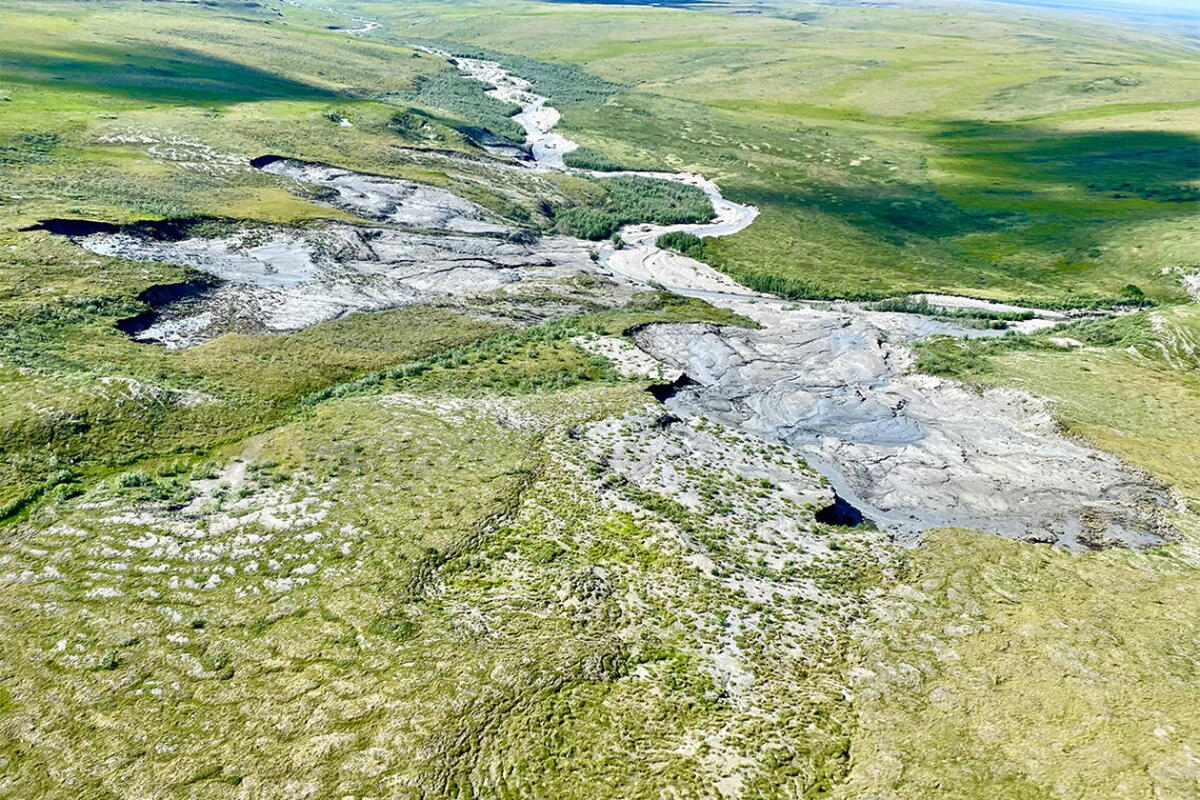
The study focused on a phenomenon known as retrogressive thaw slumps, “the sudden, landslide-like features that sometimes occur when permafrost thaws,” said Mark Lara, a professor of plant biology and geography and geographic information sciences at the University of Illinois Urbana-Champaign who led the study with postdoctoral researcher Zhuoxuan (Summer) Xia, and Liu Lin, a professor of earth and environmental sciences at The Chinese University of Hong Kong.
Thaw slumps occur when ground ice melts, suddenly destabilizing parts of the terrain. Individual slumps can affect many acres of territory, and the soil surface can shift or drop by hundreds of feet. Slumps uproot, erase, and displace much of the plant life that was there before and cause soil-carbon losses, Lara said.