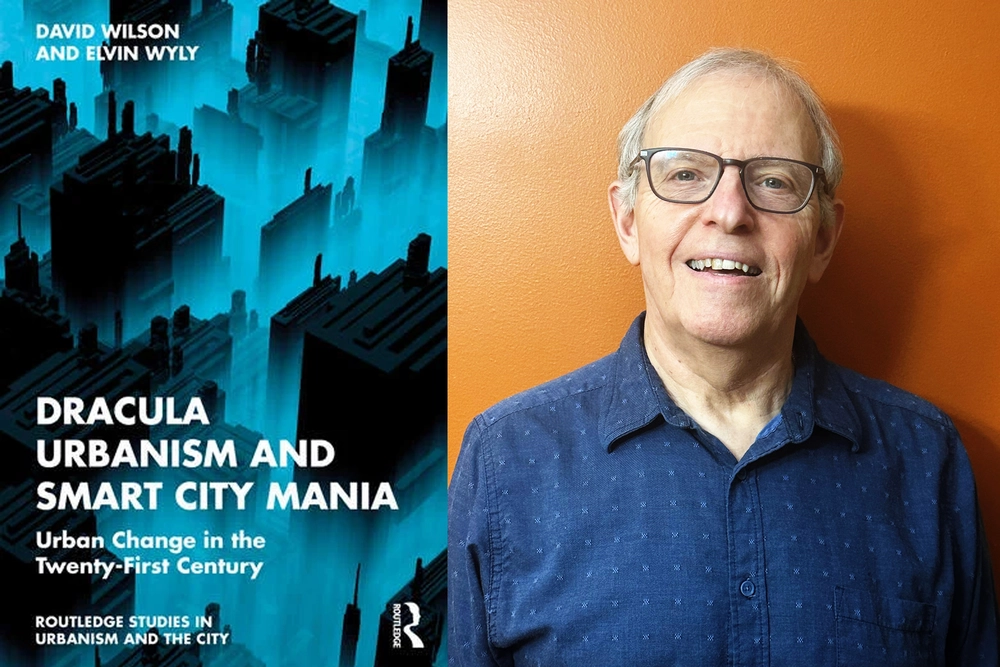
CHAMPAIGN, Ill. — City development is increasingly associated with creating “smart cities” that use technology for managing city services, home construction and attracting resources. But those strategies come with negative consequences to a city’s poor residents, said David Wilson, a University of Illinois Urbana-Champaign professor of geography and geographic information science.
Wilson is a critical urban geographer whose research interests are political economies, city growth and how policies create gentrified neighborhoods and poverty communities. He used Dracula as a metaphor to explore the dark side of smart city development in his new book “Dracula Urbanism and Smart City Mania: Urban Change in the Twenty-First Century.” The book is co-written with Elvin Wyly, a geography professor at the University of British Columbia.
Many geographers are using monster metaphors “to help understand the complicated nature of how cities are developing and redeveloping,” Wilson said. “There is so much extolling the virtues of what smart cities can deliver. It’s a very politically contrived kind of narrative. We’re interested in unearthing the underbelly of smart city development.”
Smart city development started with a focus on infrastructure and transportation networks and how technology could be used to minimize climate change, he said. But more recently, smart city development is linked to real estate development ― creating smart neighborhoods and communities through technologies such as street surveillance strategies to protect residents and smart construction that allows the control of the environment of homes or buildings through an app.